

Many of us are aware that vitamin D supports bone health, but may not know it offers many other health benefits such as promoting cardiovascular and mood health. About 42% of the US population is deficient in vitamin D. Among those with darker skin tones, that deficiency can be as high as 80%. Getting enough Vitamin D can be tricky for most people but even more so for vegans and vegetarians.
Foods That Contain Vitamin D
The National Institutes of Health recommends 400-800 IU (10-20 mcg) of vitamin D daily. That’s a very conservative amount, and depending on how deficient a person, that amount could do very little to raise blood levels. As a nutritionist, I urge my clients to get their vitamin D levels tested and then, depending on their test results, we are able to determine the right amount needed to raise levels.
Most nutritionists recommend 2000 IU (50 mcg) daily. If deficiency is found, that could be higher. Note: the measurement for vitamin D has changed from IU to mcg. For now, we'll see both measurements on a supplement bottle, but in the future we'll only see mcgs. Here is a convenient online converter tool.
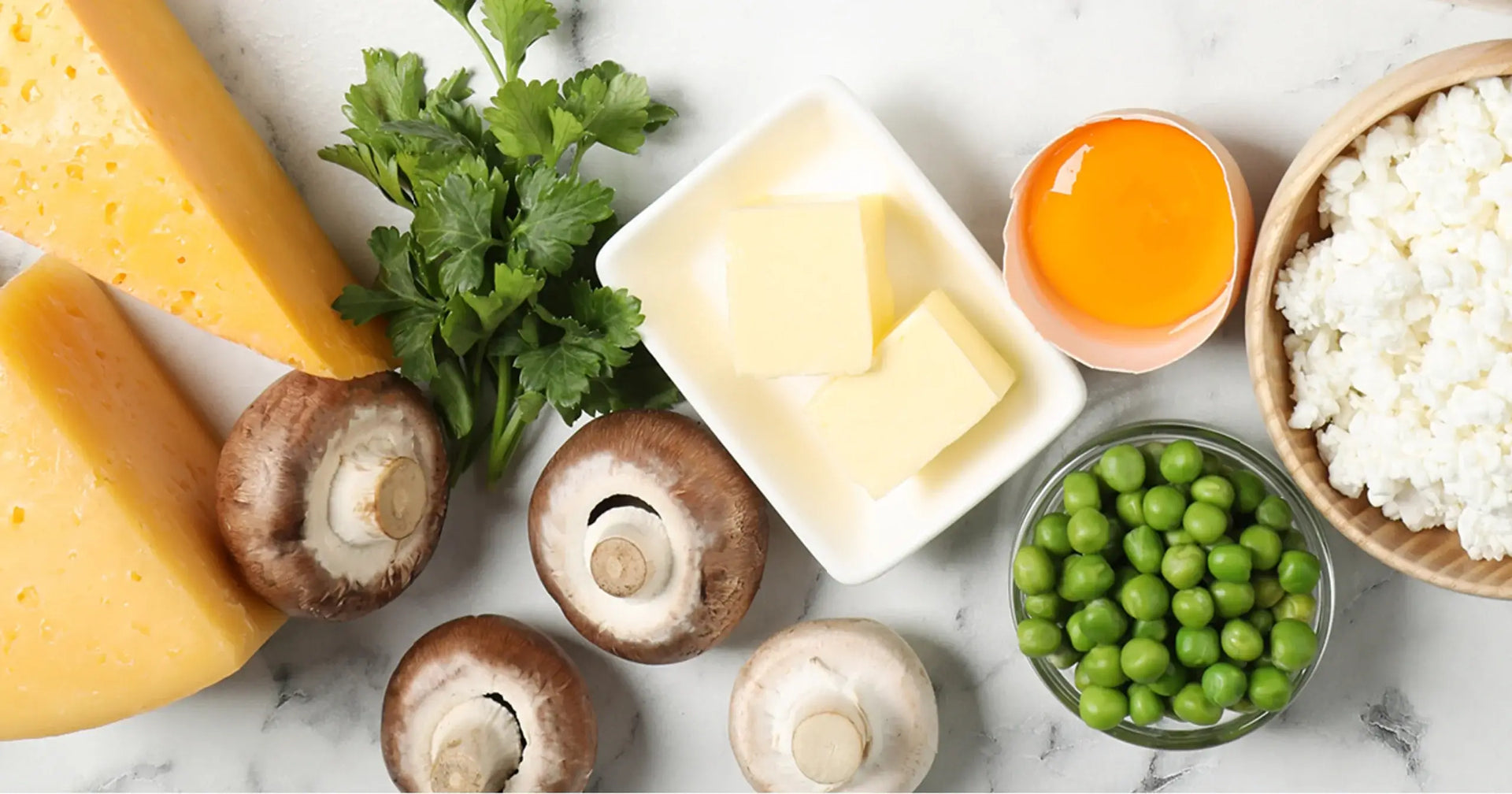
Mushrooms are a good source of vitamin D. One cup of maitake mushrooms contain 786 IU (19.65 mcg), portobello 634 IU (15.85 mcg), and chanterelle 114 IU (285 mcg).
Vegans will have to rely on fortified foods like orange juice, almond milk, cereals, and soy milk or soy yogurt to get vitamin D through food. These foods are usually fortified with vitamin D2, which is less effective at raising blood levels. For that reason, it’s best not to count on these fortified foods to provide you with optimal levels of vitamin D.
For vegetarians who use dairy and eggs, it’s a little easier. One typical egg yolk contains 37 IU (.93 mcg) of vitamin D. Pasture raised chickens that roam outside can have 3 to 4 times more vitamin D. That level can increase if their feed was fortified with vitamin D. One ounce of cheese contains 6 IU (.15 mcg), while 1 cup of milk has 127 IU (3.18 mcg).
As previously mentioned, vitamin D is essential for good health. With few foods that contain it naturally, vegan sources are particularly limited.
Spending 30 minutes a day in the sun, without sunscreen, while exposing bare arms and legs during the hours of 10:00 am and 3:00 pm is a great way to boost our levels. Depending on where you live, this may or may not be an option during the winter months. If eating mushrooms regularly and relying on fortified foods is unappealing or it doesn't increase levels enough, supplementation is a great option.
Featured Articles


